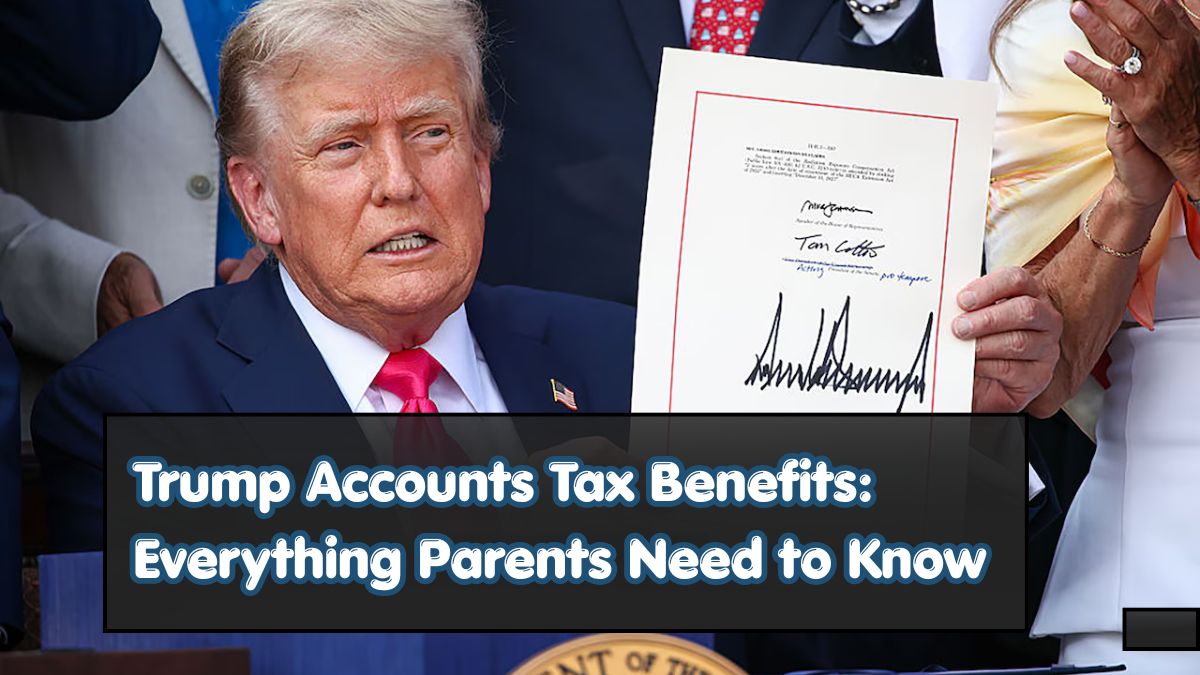
The introduction of Trump Accounts has created significant interest among parents, financial planners, and taxpayers across the United States. Designed to encourage long-term savings and wealth building for children, these accounts offer several tax advantages while also introducing new rules regarding contributions, investments, and withdrawals.
For families looking for ways to build financial security for the next generation, understanding the tax benefits and limitations of Trump Accounts is essential. This guide explains how Trump Accounts work, their potential advantages, and how they compare with other popular savings options.
See More: Who Is Eligible for Trump Accounts?
What Are Trump Accounts?
Trump Accounts are tax-advantaged investment accounts created for children under the age of 18. The primary goal is to help young Americans begin building wealth early in life through long-term investing.
The accounts operate similarly to retirement accounts in several ways. Contributions are invested in approved investment options, and earnings grow over time without being taxed annually. Once the child reaches adulthood, the account transitions into a structure that follows rules similar to traditional retirement accounts.
One of the most publicized features is the government-funded seed contribution available to eligible children born during the designated program period. This initial deposit is intended to give children a financial head start and encourage additional family contributions.
Key Tax Benefits of Trump Accounts
1. Tax-Deferred Growth
The biggest advantage of a Trump Account is tax-deferred growth.
In a regular brokerage account, investors may owe taxes each year on dividends, interest, and capital gains. With a Trump Account, investment earnings can grow without annual taxation.
This allows more money to remain invested and compound over time, potentially resulting in greater long-term growth.
For families investing over many years, the power of tax-deferred compounding can significantly increase account balances compared to taxable investment accounts.
2. Government Seed Contribution
Eligible children may receive an initial government contribution when the account is established.
This starting balance gives families an opportunity to begin investing immediately without having to provide all the initial funding themselves. Over time, even a modest contribution can grow substantially when combined with additional deposits and market returns.
3. No Earned Income Requirement
Unlike Roth IRAs and some retirement accounts, Trump Accounts generally do not require the child to have earned income before contributions can be made.
This makes it easier for parents, grandparents, and other eligible contributors to begin saving for a child’s future from birth rather than waiting until the child starts working.
4. Potential Employer Contributions
The program also allows for certain employer contributions under specific rules.
This feature creates another avenue for funding the account and may provide additional long-term growth opportunities for beneficiaries.
5. Encourages Long-Term Investing
The structure of Trump Accounts discourages early withdrawals and promotes a long-term investment mindset.
By limiting access to funds during childhood, the account is designed to maximize growth potential over many years rather than supporting short-term spending goals.
Contribution Rules and Limits
Trump Accounts have annual contribution limits that restrict how much money can be deposited each year.
Parents, relatives, employers, and other eligible contributors may add funds to the account, subject to the program’s annual cap. These limits help ensure the accounts remain focused on long-term savings rather than becoming unlimited tax shelters.
Before contributing, families should review current IRS guidance and annual limits to ensure compliance.
Investment Options
Unlike standard brokerage accounts that offer thousands of investment choices, Trump Accounts use a more restricted investment menu.
Most investments are limited to diversified, low-cost index funds and exchange-traded funds (ETFs) that focus primarily on U.S. equities.
This approach is intended to reduce complexity, lower investment costs, and encourage broad market exposure.
The emphasis on low-fee index investing aligns with many financial experts’ recommendations for long-term wealth building.
How Withdrawals Are Taxed
While the tax-deferred growth feature is attractive, families should also understand how withdrawals are treated.
When funds are eventually withdrawn, a portion of the distribution may be subject to income tax. Depending on the account’s funding sources and the beneficiary’s circumstances, different tax rules may apply.
Additionally, certain withdrawals may face penalties if they occur before reaching qualifying ages or conditions.
Because of these rules, families should carefully consider withdrawal strategies and consult a tax professional when significant distributions are planned.
Potential Kiddie Tax Considerations
One area receiving attention from tax professionals is the potential interaction between Trump Account distributions and the kiddie tax.
The kiddie tax applies to certain forms of unearned income received by children and young adults. Depending on the beneficiary’s age, student status, and financial support situation, part of a withdrawal could be taxed differently than expected.
Understanding these rules is important because they may affect the overall tax efficiency of the account.
Trump Accounts vs. Other Tax-Advantaged Accounts
Trump Accounts vs. 529 Plans
A 529 plan remains one of the most popular education savings vehicles.
The biggest advantage of a 529 plan is that qualified education withdrawals are generally tax-free. Some states also offer tax deductions for contributions.
Trump Accounts provide tax-deferred growth but do not offer the same education-specific tax benefits.
Families primarily saving for college may find 529 plans more attractive, while those seeking broader long-term wealth-building opportunities may appreciate the flexibility of Trump Accounts.
Trump Accounts vs. Roth IRAs
Roth IRAs provide tax-free qualified withdrawals in retirement, making them extremely valuable long-term savings tools.
However, Roth IRA contributions generally require earned income.
Trump Accounts remove this barrier, allowing children to begin investing before they enter the workforce.
Trump Accounts vs. Custodial Brokerage Accounts
Custodial brokerage accounts offer maximum flexibility and no contribution limits.
The tradeoff is taxation. Investment gains and income generated in brokerage accounts may create annual tax obligations.
Trump Accounts reduce this tax drag through tax-deferred growth, making them appealing for long-term investors.
Potential Drawbacks
Although Trump Accounts offer several benefits, they are not perfect.
Some financial experts point to limited investment choices, annual contribution caps, and complex withdrawal taxation as potential disadvantages.
Others argue that existing options such as 529 plans or Roth IRAs may provide greater tax benefits depending on a family’s goals.
As with any financial strategy, the best choice depends on individual circumstances, future objectives, and tax considerations.
Final Thoughts
Trump Accounts represent a new approach to helping American families build wealth for future generations. Their primary advantage lies in tax-deferred growth, allowing investments to compound without annual taxation. Additional benefits such as government seed funding, no earned-income requirement, and long-term investment incentives make them an attractive option for many parents.
However, families should also understand the contribution limits, withdrawal rules, and potential tax implications before opening an account. When used alongside other savings vehicles such as 529 plans, Roth IRAs, and traditional investment accounts, Trump Accounts may become a valuable part of a comprehensive financial plan.
For parents seeking to give their children a stronger financial foundation, these accounts offer a new opportunity worth exploring.
See More: Is Your Child Eligible for the $1,000 Treasury Grant? Check the Exact Birth Window